Field Observation / Reflective Service Analysis
When does a wellness treatment actually begin?
Observation generating an emerging question
- Type
- Field Observation / Reflective Service Analysis
- Origin
- Personal customer experience
- Theme
- Service Design / Servicescape / Service Choreography
- Status
- Observation generating an emerging question
- Evidence status
- Personal observation contextualised by existing research, not a customer finding
- Lab status
- Candidate question, not active investigation
- KIALA
- Potential transfer relevance, not KIALA evidence
- Research context
- Servicescape theory / servicescape literature / spa atmospheric-cue research / customer-journey and service-encounter research
Personal experience
For me, the treatment begins way before the treatment.
I was thinking about this recently through my experience of visiting Bannatyne Spa in Luton.
I go there for a fairly straightforward reason. I want to relax, and I want my skin to feel healthy and cared for. I usually choose a massage followed by a facial.
But when I think about what actually creates the experience I value, the massage and facial are only part of it.
The shift starts before I ever get onto the treatment bed.
Observation
Crossing the threshold
Bannatyne in Luton is a larger health club environment. There is a gym, swimming pool and the activity that naturally comes with that kind of space.
Then I walk through into the separate spa treatment area.
The door closes.
The sound changes. The lighting changes. The pace changes.
I've moved from a bright, active environment into somewhere dimmer and quieter, with gentle music.
And I notice myself changing with it.
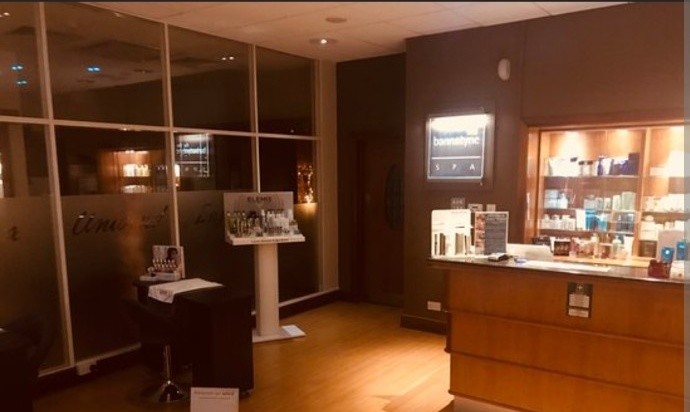
A quiet space, a quiet me.
Reflection
I become more conscious of how I'm moving. I slow down. I'm less inclined to pull out my bright phone. My behaviour starts to align with the environment I've entered.
If I'm early, I can wait in a separate relaxation room. The lighting is low, there are gentle moving lights, phones aren't used and I can simply lie down and be still.
By the time my therapist comes to collect me, something has already happened.
I have started to disconnect from the outside world.
Assumption challenged
It is easy to think:
The treatment is the service.The massage.
The facial.
The reflexology session.
Whatever intervention the customer has booked.
But my experience makes me question that.
I've received very good massages and facials elsewhere. I have a provider much closer to home where the quality of the actual treatments is also excellent.
Yet the experiences are different.
At my local provider, I generally begin to relax once I'm on the treatment bed and the treatment starts.
At Bannatyne, my transition into relaxation begins earlier.
That difference interests me.
Connection with existing research
Servicescape
In Service Design and services marketing, the physical environment surrounding a service is often described as the servicescape.
Mary Jo Bitner's foundational servicescape framework proposed that physical surroundings can influence the responses and behaviours of customers and employees within service settings.
Research conducted specifically in a spa context has also found atmospheric cues to be associated with relaxation and pleasure, with relaxation particularly important to satisfaction in that study.
That doesn't mean dim lighting and gentle music will make every customer relax.
My experience is my experience.
But it gives me a useful question to investigate.
Observation
The service around the treatment
The environment isn't the only thing contributing to my experience.
There is a sequence.
I'm welcomed.
I'm given somewhere quiet to wait.
My therapist comes to collect me.
I'm given privacy and enough time to undress and settle onto the treatment bed.
I'm asked whether I'm comfortable and warm enough.
During the treatment, my comfort continues to be checked.
At the end, I'm not abruptly told to get up and leave.
The therapist gently lets me know the treatment has finished and tells me to take my time getting up when I'm ready.
That small moment matters to me.
I've been deeply relaxed, quite often asleep, and I'm being given a little time to come, as I describe it, “back into my body.”
The transition out of the treatment is being handled too.
When I'm dressed and return to the spa reception, my therapist is waiting. She asks how I feel. If I've requested water, it's there. After a facial, I'm shown the products that were used on my skin and can purchase them if I want to, without feeling pressured. There may also be a voucher for a future visit.
Then I'm free to leave.
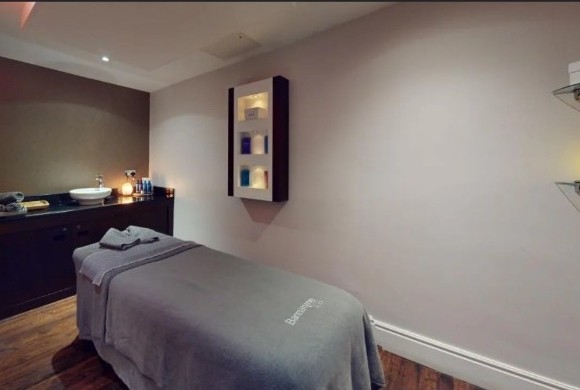
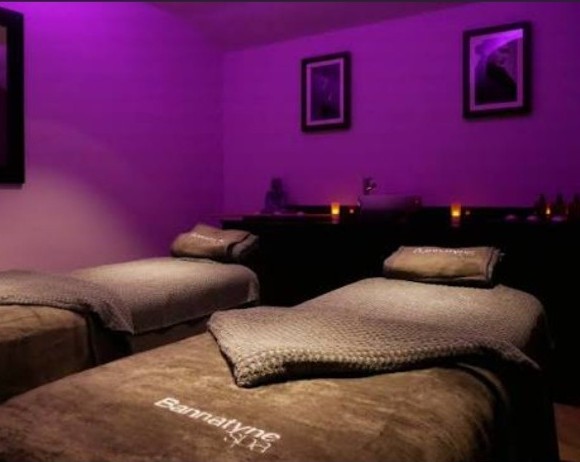
Reflection
Service choreography
This makes me think about service choreography.
A wellness experience isn't necessarily created at one touchpoint.
It can be created through the relationship between the environment, sensory cues, people, timing, transitions, information and the treatment itself.
In my Bannatyne experience, there is almost a movement:
- Outside world
- Threshold
- Slowing down
- Stillness
- Treatment
- Gentle re-entry
- Departure
Design question
So perhaps the question for a wellness business isn't only:
“Are we delivering a good treatment?”
It might also be:
“What is happening to the customer before, around and after that treatment?”If the experience we are trying to create is relaxation, for example, when should that relaxation begin?
Only when the practitioner's hands touch the customer?
Or can the service environment begin doing some of that work before the practitioner ever enters the room?
Emerging question
Supporting questionWhat role can the environment and wider service journey play in preparing someone for the experience they are about to receive?
- Emerging question
- Candidate question
- Not active investigation
Emerged from this Field Note. No research project, findings or answers have been attached to it. It may later warrant investigation.
Transfer → KIALA
- Type
- External research relevant to Service Design
- Research areas
- Servicescape / Atmospheric cues / Customer journey / Pre-core, core and post-core service encounters / Service choreography
Research-informed KIALA design question
At what point should the intended KIALA experience begin, and what role should the environment, arrival and transitions play in creating the customer's desired state?- Research-informed design question
- Not customer evidence
- Not a design decision
- Not currently a new KIALA hypothesis
What transfers is the external research, not my personal Bannatyne experience. This Field Note is not KIALA customer evidence and does not alter KIALA's current customer-research findings or hypotheses.
KIALA is already considering arrival, sensory environment, privacy, transitions, practitioner behaviour, customer state, closure, short-format wellness experiences, and Ritual, Choreography & Attentive Care. The external literature therefore has potential relevance to future KIALA service-design and prototyping work.
Relevance does not equal validation. If this question becomes important enough to influence KIALA's design, it should eventually be tested through appropriate KIALA prototyping and/or research rather than assumed to be correct.
Wellness Innovation Lab
- Personal experience
- Observation
- Reflection
- Connection with existing research
- Assumption challenged
- Emerging question
Transfer to KIALA
- Relevant external research
- Transfer → KIALA
- Research-informed design question
- Future test if warranted
- KIALA-specific evidence
- Learning / design decision
Research informing this Field Note
External research providing context for questions generated by personal experience. It does not prove that a personal response is universal, and it does not establish “wellness treatments begin before the treatment” as a research finding. These four sources are not a complete literature review.
Bitner, M. J. (1992) “Servicescapes: The Impact of Physical Surroundings on Customers and Employees.” Journal of Marketing, 56(2), 57–71.
Role in this Field Note: Foundational servicescape framework supporting consideration of the physical environment as part of the service experience and its potential relationship with customer and employee responses and behaviours.
View source →Mari, M. & Poggesi, S. (2013) “Servicescape cues and customer behavior: a systematic literature review and research agenda.” The Service Industries Journal, 33(2), 171–199.
Role in this Field Note: Broader literature context concerning servicescape characteristics and customer behaviour.
View source →Loureiro, S. M. C., Almeida, M. & Rita, P. (2013) “The effect of atmospheric cues and involvement on pleasure and relaxation: The spa hotel context.” International Journal of Hospitality Management, 35, 35–43.
Role in this Field Note: Spa-specific empirical research providing context for relationships between atmospheric cues, relaxation, pleasure and satisfaction in the setting studied.
View source →Voorhees, C. M. et al. (2017) “Service encounters, experiences and the customer journey: Defining the field and a call to expand our lens.” Journal of Business Research, 79, 269–280.
Role in this Field Note: Supports consideration of the wider service journey rather than limiting analysis to the core service encounter, including pre-core, core and post-core encounters.
View source →